Polski
 Українська
How much does it cost to plaster a house? Price per m² in 2026 and a 100 m² example
indekscen.pl editorial team · published 30 September 2026 · prices according to the 5 October 2026 index
Interior plastering in a house usually costs 44 PLN/m² for labour alone (typically 40 ‑ 51 PLN/m²), excluding materials. A 100 m² house usually has about 350 m² of walls and ceilings to plaster, so labour costs about PLN 15,000, typically PLN 14,000 ‑ 18,000. External rendering is more expensive: the median labour cost is 75 PLN/m².
At a glance (as at 5 October 2026)
- Labour for plastering interior walls usually costs 40 ‑ 51 PLN/m², with a median of 44 PLN/m².
- Plastering a 100 m² house, or about 350 m² of walls and ceilings, costs around PLN 15,000 for labour alone at the median rate.
- Labour for external rendering usually costs 75 PLN/m², while the external render material itself costs about 48 PLN/m².
- Removing old plaster before applying new plaster adds a median cost of 70 PLN/m².
- The median plastering price is based on 4 price lists and articles collected by indekscen.pl.
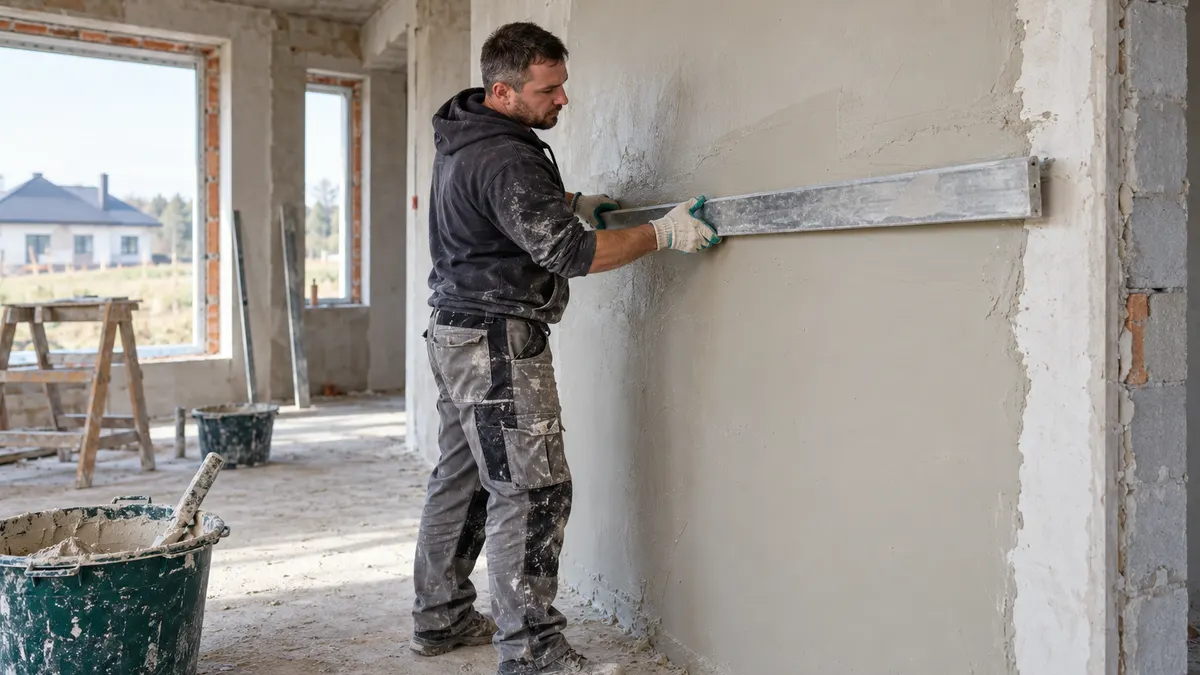
Plastering is one of the larger expenses involved in bringing a property to developer standard, and contractors’ quotes can differ by half. Some charge for labour alone, while others quote a price including materials. Some measure walls including window openings, while others exclude them. We show how much it costs to plaster a house per square metre and for the entire building, and what causes the difference.
How much does wall plastering cost per m²?
Plastering interior walls usually costs 44 PLN/m² for labour alone, according to 4 price lists and articles collected by indekscen.pl. Half of the quotes fall within 40 ‑ 51 PLN/m², the cheapest start at 25 PLN/m², and the most expensive, usually for hand-applied plaster, reach 75 PLN/m². Details and quotations are available on the wall plastering page.
This price covers only the application of the plaster. Materials, surface preparation (cleaning, repairing defects and priming) and additional materials such as corner beads, strips and mesh are charged separately.
| Wall plastering: option | Median | Typically | Sources |
|---|---|---|---|
| Basic service | 44 PLN/m² | 40 ‑ 51 PLN/m² | 4 |
| External rendering (labour) | 75 PLN/m² | 53 ‑ 110 PLN/m² | 3 |
| External render, materials only (excluding labour) | 48 PLN/m² | 48 PLN/m² | 2 |
Median and typical range from public price lists, as at 5 October 2026. Each price includes a source and quotation on the service page.
How much does it cost to plaster a 100 m² house?
At the median rate, plastering a 100 m² house costs about PLN 15,000 for labour alone, typically PLN 14,000 ‑ 18,000. This results from the surface area: a house with 100 m² of usable floor space usually has about 350 m² of walls and ceilings to plaster, as walls have several times the surface area of the floor.
The approximate labour costs for different plastering areas are as follows:
| Area of walls and ceilings | Example | Labour at the median rate | Typical range |
|---|---|---|---|
| 170 m² | 50 m² flat | PLN 7,500 | PLN 6,800 ‑ 8,700 |
| 250 m² | 70 m² single-storey house | PLN 11,000 | PLN 10,000 ‑ 13,000 |
| 350 m² | 100 m² house | PLN 15,000 | PLN 14,000 ‑ 18,000 |
| 500 m² | 150 m² house | PLN 22,000 | PLN 20,000 ‑ 26,000 |
The area is only an estimate. The contractor will measure the walls and should tell you whether window and door openings are deducted or included in full. This can change the total by dozens of square metres.
Machine or hand plastering: which is cheaper?
Machine plastering is usually cheaper per square metre for large areas because a team using a plastering machine works several times faster than a plasterer with a trowel. We do not have a separate median for machine plastering, but the highest rates in our sources, close to 75 PLN/m², apply specifically to hand-applied plaster.
Hand plastering makes sense for small areas, such as a single room, a bathroom or repairs after replacing installations. For an entire house, a team using a plastering machine is faster, and machine-applied plaster, such as popular gypsum mixes designed for plastering machines, has an even thickness across the entire wall.
Gypsum or cement-lime plaster?
Gypsum plaster is standard in rooms because it is smooth after finishing and usually does not require a skim coat. Cement-lime plaster is used in damp rooms and utility areas: in bathrooms beneath tiles, as well as in garages, basements and boiler rooms. It is more resistant to moisture and impact but has a rougher surface.
A practical comparison:
- Gypsum plaster: smooth, can be painted after priming, unsuitable for permanently damp rooms.
- Cement-lime plaster: moisture-resistant, suitable beneath tiles, usually requires a skim coat before painting.
- Skim coat over cement-lime plaster: an additional median cost of 48 PLN/m², which significantly increases the cost of finishing walls over large areas.
This is why many houses use both types: gypsum plaster in rooms and cement-lime plaster in bathrooms and utility rooms.
How many m² can a plasterer complete per day?
A team using a plastering machine usually applies between 100 and 200 m² of machine plaster per day, depending on the number of workers and the complexity of the walls. A plasterer working by hand completes much less, roughly several dozen square metres per day. A machine-plastering team can therefore plaster a 100 m² house in a few working days, plus the time required for preparation, including corner beads, strips and protecting the windows.
Before plastering, the electrical and plumbing installations in the walls must be complete, and the windows and door frames must be fitted. Plaster applied before the installations are fitted will later need to be chipped away and patched.
What else should be added to the plastering cost?
In addition to labour, the plastering bill includes items worth asking about before signing a contract:
| Service | Median | Typically | Sources |
|---|---|---|---|
| Wall plastering | 44 PLN/m² | 40 ‑ 51 PLN/m² | 4 |
| Removing old plaster | 70 PLN/m² | 58 ‑ 73 PLN/m² | 3 |
| Gypsum skim coating | 48 PLN/m² | 46 ‑ 54 PLN/m² | 6 |
| Wall painting | 22 PLN/m² | 18 ‑ 30 PLN/m² | 33 |
Median and typical range from public price lists, as at 5 October 2026. Each price includes a source and quotation on the service page.
- Materials. Plaster, primer, corner beads and mesh. Ask whether the contractor buys them and adds a mark-up.
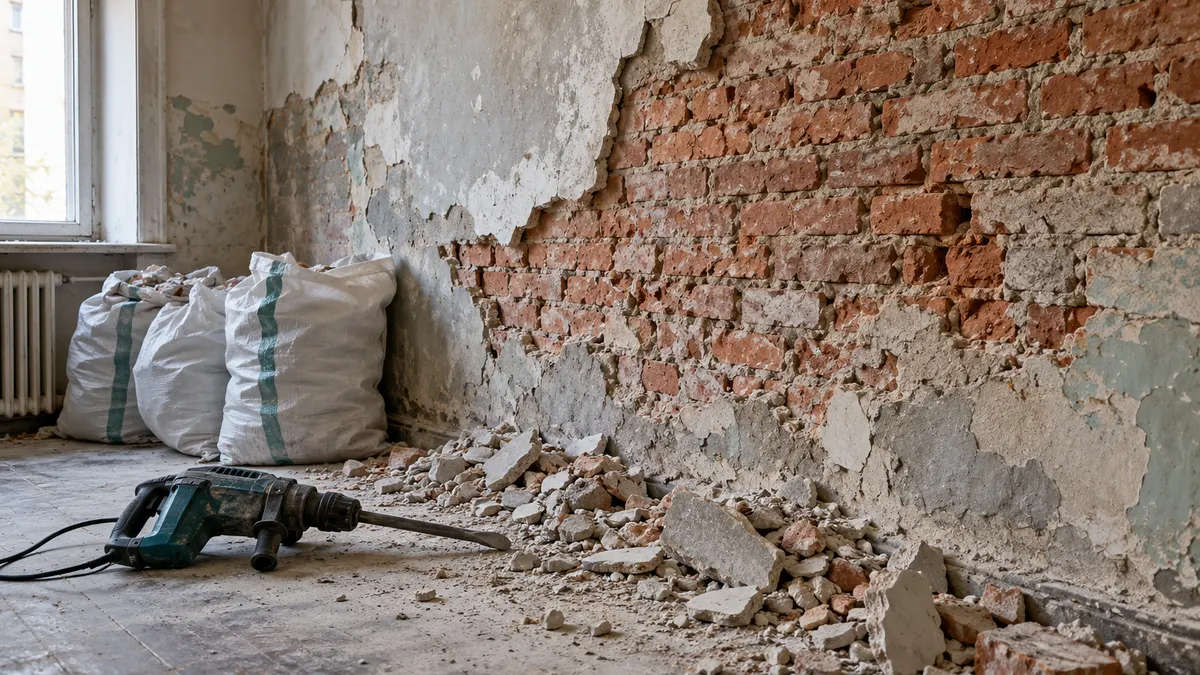
- Removing old plaster. When renovating an old house, removing old plaster has a median cost of 70 PLN/m², which is more than applying the new plaster itself.
- Surface preparation. Priming and repairing defects are usually charged separately per square metre.
- Skim coating and painting. After plastering, there is still wall painting, as well as gypsum skim coating in the case of cement-lime plaster.
- Cleaning and waste disposal after removing old plaster if you are renovating an occupied house.
Should plastering be done before or after screeding, and in what order?
Interior plastering is usually completed before screeding, but after installations have been fitted in the walls and the windows installed. There is a simple reason for this sequence: plastering makes the floor dirty, and mortar and gypsum falling onto fresh screed would later need to be chipped away. Some teams reverse the order so that the plaster meets the finished floor evenly, but the screed must then be carefully protected with sheeting.
The typical sequence for bringing a property to developer standard is:
- Electrical, water and drainage installations in the walls.
- Installation of windows and entrance door frames.
- Interior plastering of walls and ceilings.
- Screeds and underfloor heating, if included in the design.
- Drying the building, followed by skim coating, priming and painting.
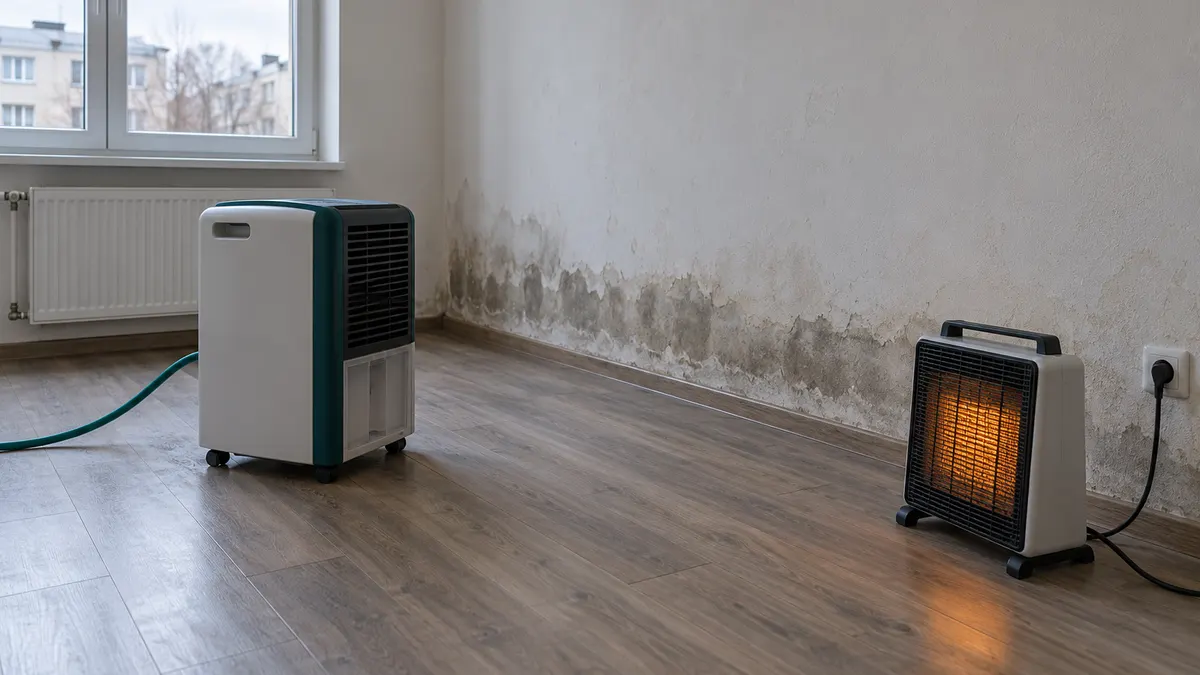
Fresh plaster releases a great deal of water into the interior, so the house must be ventilated for several weeks and also heated in winter. Drying it too quickly with blowers while the windows are closed may cause gypsum plaster to crack.
How much does external rendering cost?
External rendering usually costs 75 PLN/m² for labour alone, while the external render material costs about 48 PLN/m². If the render is applied over insulation, the labour cost of applying the external render alone has a median of 60 PLN/m², while a complete finished insulation and render system costs about 120 PLN/m².
The type of render matters more here than indoors: acrylic render is the cheapest, while silicone and silicate renders cost more but attract less dirt and retain their appearance for longer. Details, including an example for a house exterior, are provided in the article external rendering: labour cost per m².
How can you avoid overpaying for plastering?
- Compare like-for-like quotes: labour alone with labour alone, using the same method of accounting for openings.
- Ask about the plaster thickness and the tolerance for wall evenness. Uneven plaster means an additional skim-coating cost.
- Arrange plastering outside the peak season. In winter, contractors have more availability for work in heated buildings.
- Check the team’s previous work, preferably in person and with light falling from the side to reveal any unevenness.
Plastering is one of the stages covered in our articles cost of building a house and how much does it cost to renovate a flat.
„Dla tynkowania wewnętrznego, stawki robocizny wahają się zazwyczaj od 25 do 45 zł za m². Jest to cena obejmująca samo nałożenie tynku, bez materiału.”
jakie-instalacje.pl, source
„Należy liczyć się z kosztem robocizny za tynk wewnętrzny nakładany ręcznie od 52 do nawet 75 zł/m2”
budujemydom.pl, source
„Tynkowanie ręczne tynkiem gipsowym | 35-48 zł za 1m²”
oferteo.pl, source
„Tynki gipsowe ręczne wycenia się na 38-55 zł/m², gdy podłoże jest równe.”
jakietynki.pl, source
You can find more finishing-work prices in the renovation and finishing category.
The prices in this article come from publicly available contractor price lists and construction articles. Each price has a source, date and verbatim quotation on the service page.
Frequently asked questions
How much does plastering cost without materials?
Sama robocizna tynkowania wewnętrznego kosztuje zwykle 40 ‑ 51 PLN/m², mediana to 44 PLN/m². Tynk, narożniki i grunt kupuje się osobno albo wykonawca dolicza je do rachunku.
How much does labour for external rendering cost per m²?
Robocizna tynkowania zewnętrznego to mediana 75 PLN/m². Sama robocizna nałożenia tynku cienkowarstwowego na ocieplenie kosztuje zwykle 56 ‑ 63 PLN/m².
Do gypsum-plastered walls need a skim coat?
Zwykle nie: dobrze położony tynk gipsowy jest na tyle gładki, że wystarczy go zagruntować i pomalować. Gładź, z medianą 48 PLN/m², kładzie się głównie na tynk cementowo-wapienny albo przy nierównych ścianach.
How much does it cost to plaster a 50 m² flat?
W mieszkaniu 50 m² do otynkowania jest orientacyjnie 170 m² ścian i sufitów, co przy medianie daje około PLN 7,500 robocizny. Dokładny metraż policzy wykonawca po odjęciu okien i drzwi.
When can walls be painted after plastering?
Tynk gipsowy schnie zwykle od dwóch do czterech tygodni, cementowo-wapienny dłużej. Przed malowaniem ściany trzeba zagruntować, a samo malowanie to dodatkowo mediana 22 PLN/m².
Check prices with sources
Every amount quoted in the article has a source, date and verbatim quote from the price list on the service page.
Translation of the original Polish article dated 30 September 2026. Quotations from price lists are in Polish, as published by the companies. Read the original in Polish.
Found an error? Report it. Do you provide these services? Add your company's price list free of charge.