Polski
 Українська
Dog tartar removal: 2026 price, anaesthesia and ultrasonic scaling
indekscen.pl editorial team · published 30 September 2026 · prices according to the 5 October 2026 index
Dog tartar removal at veterinary practices most often costs PLN 150 (typically PLN 125 ‑ 200), while prices listed in price lists range from PLN 50 to PLN 400. There is also usually a pre-procedure consultation, costing around PLN 80, and sometimes anaesthesia and tests are charged separately.
At a glance (as at 5 October 2026)
- Dog tartar removal usually costs PLN 125 ‑ 200, while the median price from price lists is PLN 150.
- The cheapest price lists quote dog tartar removal from PLN 50, and the most expensive up to PLN 400, depending on the amount of tartar and the facility.
- A standard veterinary consultation before the procedure usually costs PLN 58 ‑ 120.
- Cat tartar removal usually costs PLN 150 ‑ 375, which is similar to or slightly more than for a dog.
- The median price of dog tartar removal is based on 3 sources collected by indekscen.pl.
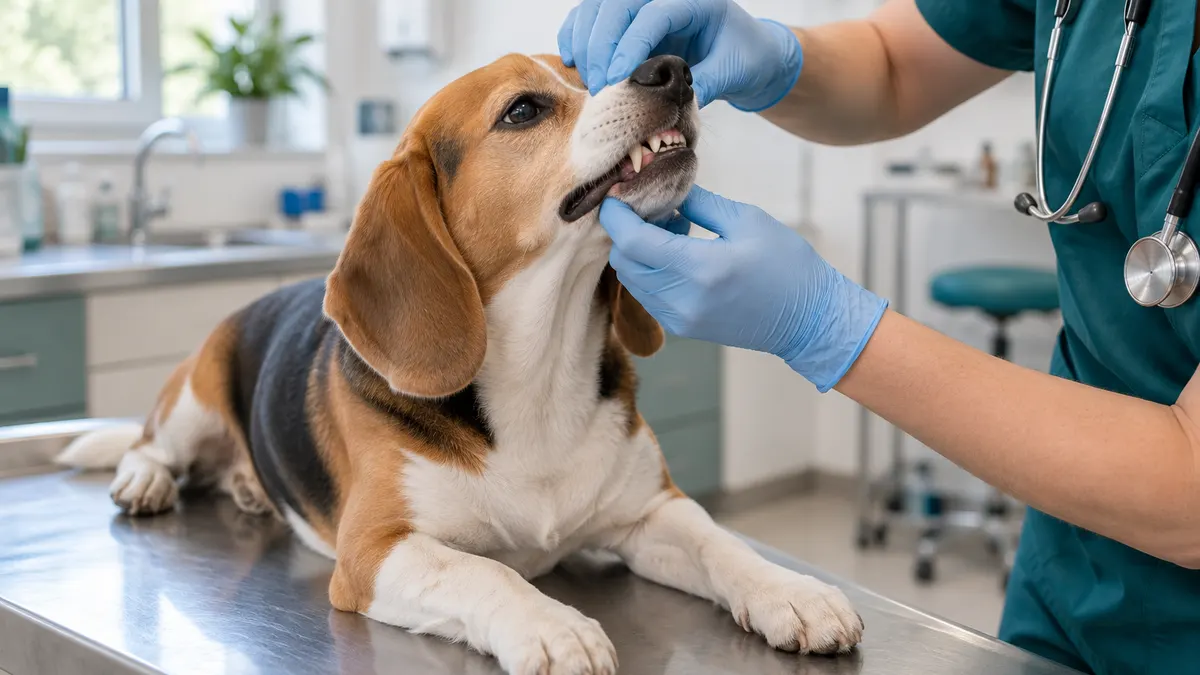
Tartar on a dog’s teeth usually becomes noticeable only when the teeth near the gums turn brown and the dog’s breath smells unpleasant. Tartar removal is one of the more common procedures at veterinary practices, and price lists quote widely varying amounts. We have collected the available prices and explain what makes up the bill, making it easier to compare offers.
How much does dog tartar removal cost?
Dog tartar removal most often costs PLN 150, with a typical range of PLN 125 ‑ 200. This is the median from 3 sources collected by indekscen.pl: a veterinary practice price list and articles about the cost of animal treatment. The lowest prices, from PLN 50, apply to a simple procedure involving a small amount of tartar. The highest, up to PLN 400, apply to advanced tartar and a more extensive procedure.
It should be noted that there are fewer sources than for other services, as many clinics do not publish prices or only provide a price ‘from’ a certain amount. This is why we show verbatim quotes from the sources on the dental scaling for a dog page. Before the procedure, it is always worth asking the practice for a quote covering the full cost.
| Service | Median | Typically | Sources |
|---|---|---|---|
| Dental scaling for a dog | PLN 150 | PLN 125 ‑ 200 | 3 |
| Cat teeth cleaning/tartar removal | PLN 200 | PLN 150 ‑ 375 | 3 |
| Veterinary appointment | PLN 80 | PLN 58 ‑ 120 | 7 |
Median and typical range from public price lists, as at 5 October 2026. Each price includes a source and quotation on the service page.
What makes up the bill for dog tartar removal?
The bill for dog tartar removal often includes several items rather than a single amount from the price list. Before comparing two practices, check what is included in the price:
| Item | Estimated cost | When it applies |
|---|---|---|
| Pre-procedure consultation and general examination | PLN 58 ‑ 120 | always, before the procedure |
| Tartar removal (scaling) and polishing | PLN 125 ‑ 200 | the procedure itself |
| General anaesthesia | charged separately in some price lists | when the practice does not include it in the procedure price |
| Blood tests before anaesthesia | charged separately | usually for older dogs |
| Extraction of diseased teeth | charged separately | when the vet considers it necessary |
A veterinary consultation costs around PLN 145 in large cities and around PLN 85 in smaller localities. A similar difference usually applies to the entire procedure, although we have not yet collected separate city-level prices for tartar removal.
How much does ultrasonic dog tartar removal cost?
Ultrasonic dog tartar removal costs the same as a standard procedure, usually PLN 125 ‑ 200. An ultrasonic scaler is a standard tool in veterinary practices, just as it is at a dentist’s surgery. Its vibrations break up hard deposits, while water flushes them away. After scaling, the vet polishes the teeth to leave their surfaces smooth and slow down plaque build-up.
The word ‘ultrasonic’ in an offer is therefore not a reason for an additional charge. The price is more likely to be affected by anaesthesia, the extent of the procedure and any tooth extractions.
Can tartar be removed from a dog without anaesthesia?
Some grooming salons offer dog tartar removal without anaesthesia, but usually as a cosmetic treatment involving scraping visible tartar from the crowns of the teeth. The price is set individually. Vets generally recommend performing the procedure under anaesthesia, as this is the only way to clean safely below the gum line, where inflammation begins, and examine the entire mouth.
General anaesthesia always carries some risk, especially for older or unwell dogs. This is why the vet examines the dog beforehand and often orders blood tests for older animals. The decision on whether and how to remove the tartar is best made together with a vet who knows the dog’s health.
How long does dog tartar removal take?
Dog tartar removal itself usually takes between half an hour and an hour, or longer if there is a large amount of tartar or teeth need to be extracted. Preparation for anaesthesia and recovery also take time, so the dog will usually spend several hours at the practice and return home the same day. The practice will explain how long the dog must fast beforehand and when it can be fed after the procedure.
What happens during dog tartar removal, step by step?
Dog tartar removal follows a similar process at most practices, and each stage affects the final price:
- Pre-procedure consultation. The vet examines the dog’s teeth, listens to its heart and lungs, and assesses whether it can safely undergo anaesthesia. This usually costs PLN 58 ‑ 120.
- Preparation. The dog arrives having fasted, and older animals often undergo blood tests.
- Anaesthesia and scaling. The vet uses an ultrasonic scaler to remove tartar from the crowns of the teeth and below the gums.
- Assessment and possible tooth extraction. The vet may extract loose or damaged teeth, usually after consulting the owner.
- Polishing and recovery. Smooth teeth accumulate plaque more slowly, and the dog returns home after recovering from the anaesthetic.
Which dogs develop the most tartar?
Small breeds, such as Yorkshire terriers, Maltese dogs, dachshunds and miniature poodles, usually develop the most tartar. Their teeth are tightly packed in small jaws, making it easier for food debris to become trapped between them. Tartar also builds up more quickly in older dogs and those fed only soft food. For these dogs, having their teeth checked at every appointment is particularly worthwhile, as treatment is shorter and cheaper when there is only a small amount of tartar.
Is it worth removing a dog’s tartar, and what are the risks of leaving it untreated?
Dog tartar removal is a medical procedure, not a cosmetic one. Tartar is mineralised bacterial plaque, beneath which gingivitis develops. If left untreated, it can lead to periodontal disease, loose teeth and tooth loss, pain while eating and unpleasant breath. Vets also point out that chronic inflammation in the mouth places a burden on the entire body.
From a financial perspective, removing a small amount of tartar is cheaper than later treatment involving tooth extractions. A vet will decide whether the procedure is already necessary after examining the dog’s teeth during a routine consultation. We compare the annual costs of regular veterinary care in the article how much does it cost to keep a dog.
How can you reduce tartar build-up and avoid overpaying?
- Brush your dog’s teeth. A toothbrush and pet toothpaste, not human toothpaste, are the most effective way to slow plaque build-up.
- Have the teeth checked during vaccination appointments. The consultation is taking place anyway, and the vet can assess whether the tartar already needs to be removed.
- Ask for a quote covering the full cost. Check whether the price includes anaesthesia, pre-procedure tests, polishing and any tooth extractions.
- Do not postpone the procedure for years. The more tartar and gum damage there is, the longer the procedure and the higher the bill.
- Treat dental chews and water additives as supporting measures. They may slow plaque formation, but they will not remove hard tartar.
If you also have a cat, bear in mind that the procedure is similar for cats and usually costs PLN 150 ‑ 375. We cover other cat-care expenses in the article cost of microchipping a cat.
„W przypadku usuwania kamienia nazębnego u psa, na chwilę obecną, cena zabiegu waha się w granicach od 100 do 400 zł.”
animalhotels.com, source
„PUPIL Gabinet weterynaryjny | od 150 zł”
znanylekarz.pl, source
„usuwanie kamienia nazębnego – ok. 50-150 zł,”
Smartney.pl, source
You can find more prices for animal services in the animals category.
The prices in this article come from public veterinary practice price lists and articles about the cost of animal care. Each price is accompanied by its source, date and a verbatim quote on the service page. This article is not a substitute for veterinary advice.
Frequently asked questions
How much does dog tartar removal cost in Warsaw?
Osobnej mediany dla Warszawy jeszcze nie mamy. W dużych miastach ceny weterynarzy są zwykle wyższe: podstawowa wizyta kosztuje tam około PLN 145, więc zabieg częściej wypada w górnej części przedziału PLN 125 ‑ 200.
How much does it cost to remove tartar from a dog's teeth?
Wyczyszczenie kamienia nazębnego u psa kosztuje zwykle PLN 125 ‑ 200, a mediana to PLN 150. Część gabinetów podaje cenę „od”, bo ostateczny koszt zależy od stanu zębów i znieczulenia.
What dissolves tartar on a dog's teeth?
Kamienia, który już stwardniał, nie rozpuszczą ani pasty, ani płyny do wody, ani gryzaki. Usuwa go lekarz weterynarii podczas zabiegu za około PLN 150, a środki domowe pomagają jedynie spowolnić odkładanie się nowego osadu.
How much does cat tartar removal cost?
Usuwanie kamienia nazębnego u kota kosztuje zwykle PLN 150 ‑ 375, mediana to PLN 200. Cena rośnie, gdy trzeba usunąć chore zęby albo doliczyć znieczulenie i antybiotyk.
How often should a dog's tartar be removed?
Częstotliwość zależy od psa: małe rasy odkładają kamień szybciej niż duże. O terminie kolejnego zabiegu decyduje lekarz weterynarii po kontroli jamy ustnej, która jest częścią zwykłej wizyty za około PLN 80.
Check prices with sources
Every amount quoted in the article has a source, date and verbatim quote from the price list on the service page.
Translation of the original Polish article dated 30 September 2026. Quotations from price lists are in Polish, as published by the companies. Read the original in Polish.
Found an error? Report it. Do you provide these services? Add your company's price list free of charge.