Polski
 Українська
Waste collection fee 2026: rates per person and cost for a family
indekscen.pl editorial team · published 30 September 2026 · prices according to the 5 October 2026 index
In 2026, the waste collection fee is most commonly 31 PLN/month per resident when waste is sorted (typically 29 ‑ 33 PLN/month, from 27 PLN/month to 35.20 PLN/month based on official rates collected by indekscen.pl). A family of four therefore pays about PLN 120 per month and about PLN 1,500 per year.
At a glance (as at 5 October 2026)
- The fee for collecting sorted waste is usually 29 ‑ 33 PLN/month per person, while the median official rate is 31 PLN/month.
- A family of four pays about PLN 120 per month for waste collection, or about PLN 1,500 per year.
- Failure to sort waste means a rate at least twice as high, which at the median is about PLN 60 per person per month.
- Municipalities that calculate the fee on a basis other than per person, such as by floor area, usually charge 24 ‑ 31 PLN/month per month according to our data.
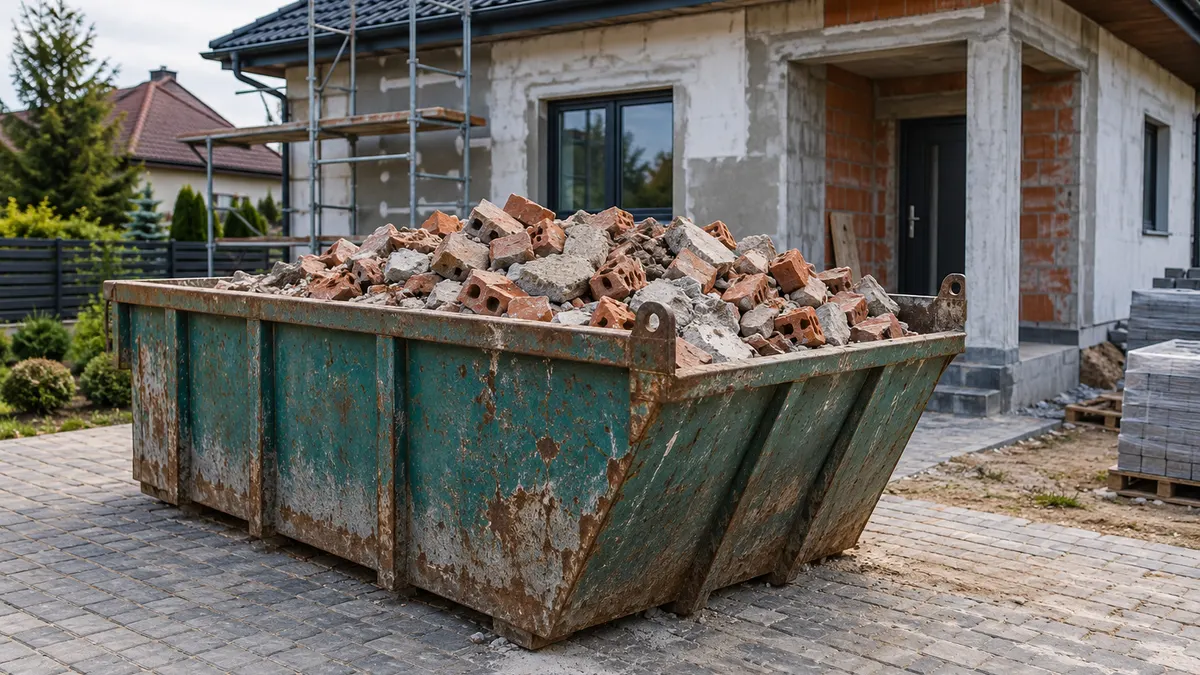
- Renovation waste is not covered by the fee: a rubble skip of about 5 m³ usually costs PLN 675 ‑ 890.
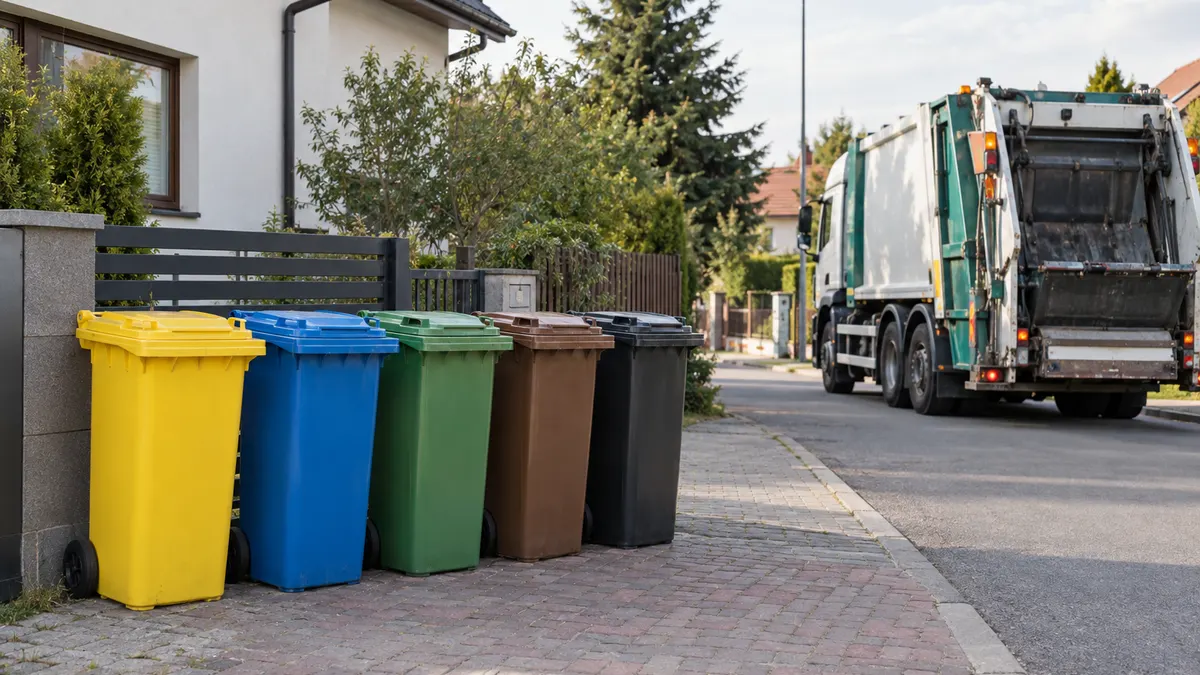
The waste collection fee is one of the few bills where you cannot choose the provider: waste collection is organised by the municipality, and the rate is set by the municipal council. Even so, there are considerable differences between localities, while the amount on the bill also depends on the number of household members, waste sorting and discounts that residents must apply for themselves. We have collected official rates and calculated how much a typical household pays.
How much is the waste collection fee per person in 2026?
In 2026, the waste collection fee per person is most commonly 31 PLN/month when waste is sorted, based on official rates collected by indekscen.pl. Half of the rates fall within 29 ‑ 33 PLN/month. The lowest rate in our sources is 27 PLN/month, and the highest is 35.20 PLN/month. The sources are adopted municipal price lists, including those of Kraków and Katowice, cited at the bottom of the article.
It is worth remembering that the waste collection fee is not a market price. Each municipality calculates it to cover the cost of collecting, transporting and processing waste from its area, so the rate in a small municipality far from a processing facility may be higher than in a large city. Details of the rate and its sources are available at waste collection fee (rate per resident).
| Service | Median | Typically | Sources |
|---|---|---|---|
| Waste collection fee (rate per resident) | 31 PLN/month | 29 ‑ 33 PLN/month | 2 |
| Rubbish and waste removal | 28 PLN/month | 24 ‑ 31 PLN/month | 2 |
Median and typical range from public price lists, as at 5 October 2026. Each price includes a source and quotation on the service page.
How much will a family pay for waste collection? Full-year examples
At a per-person rate equal to the median, a family of four pays about PLN 120 per month for waste collection, or about PLN 1,500 per year. The fee increases in direct proportion to the number of household members, so with a per-person rate, every additional resident adds another 31 PLN/month.
| Household | Monthly (median) | Annually (median) |
|---|---|---|
| 1 person | 31 PLN/month | about PLN 370 |
| 2 people | about PLN 60 | about PLN 740 |
| 3 people | about PLN 90 | about PLN 1,100 |
| 4 people | about PLN 120 | about PLN 1,500 |
| 5 people | about PLN 160 | about PLN 1,900 |
This calculation assumes that waste is sorted and no discounts apply. In many municipalities, large families receive a discount or pay for no more than a set number of people, while houses with a compost bin qualify for a partial exemption. Within the typical range of rates (29 ‑ 33 PLN/month), the annual bill for a family of four is usually between PLN 1,400 ‑ 1,600.
How municipalities calculate the waste collection fee: per person, by water use or by floor area
Calculating the waste collection fee by the number of residents is the most common method, but it is not the only one. The Act on Maintaining Cleanliness and Order in Municipalities allows the municipal council to choose one of four methods:
- By the number of residents at the property: the rate multiplied by the number of people who actually live there (not those registered there).
- By the amount of water used: a rate per cubic metre of water recorded by the meter. Warsaw is among the cities that use this method for multi-unit buildings.
- By the floor area of the dwelling: the rate depends on the floor area. One example in our data is Białystok, where the fee rises across floor-area bands.
- Per household: one rate per household, usually varying according to the number of people.
According to the rates collected for rubbish and waste removal, where we combine different calculation methods, a household usually pays 24 ‑ 31 PLN/month per month (median 28 PLN/month). The method matters: when the fee is based on floor area, a single person in a large flat will pay more than under a per-person system, while a water-use system costs more for families with children who use a lot of water.
How much is the waste collection fee in Warsaw, Wrocław and Poznań?
The waste collection fee in Warsaw, Wrocław and Poznań depends on a resolution adopted by each city’s council, and we do not yet include these rates in the index. In blocks of flats in Warsaw, the fee depends on water use, while detached houses pay a fixed rate per household, so the bill is difficult to compare directly with a per-person rate.
You can find the current rate for your locality in the municipal council resolution on the method and rate used to calculate the fee, usually on the authority’s website under “waste” or “waste management”. When comparing municipalities, pay attention to the calculation method, not just the figure in the resolution. We show general differences in service prices between cities in the article where services are cheapest.
How much is the waste collection fee if waste is not sorted?
The waste collection fee for unsorted waste is at least twice and no more than four times the standard rate, as stipulated by law. At the median of 31 PLN/month per person, this means at least about PLN 60 per person per month. A family of four found not to be sorting its waste by the collection company will then pay at least about PLN 250 per month instead of PLN 120.
The higher rate is not imposed without a formal procedure because of a single incorrectly sorted bag. The waste collection company documents improper sorting, often with photographs, and informs the municipality, which issues a decision imposing the higher fee for the relevant period. The most common reasons are glass and plastic in mixed waste and food and garden waste placed in plastic bags.
Are people over 65 exempt from waste collection fees?
People over 65 are not automatically exempt from the waste collection fee under national law. Older residents pay the same rate as other residents, usually 29 ‑ 33 PLN/month per person, unless their municipality has introduced its own discount. The municipal council may grant a partial or full exemption to people on low incomes, large families or households receiving social assistance, for example.
Discounts and exemptions most commonly found in municipal resolutions include:
- Compost bin at a detached house: a partial exemption from the fee, which every municipality must offer, although the municipality sets the amount.
- Large family: a discount for holders of the Large Family Card or a fee charged only up to a specified number of people.
- Low income: an exemption for people who meet the income criterion for social assistance.
You usually need to apply for a discount or exemption yourself by submitting an amended declaration or an application. If you are unsure whether you qualify, ask the waste management department at your local authority.
Waste collection fees and business activity: who pays differently?
The waste collection fee for a business is not calculated per person if the business operates from premises where nobody lives. For non-residential properties, the municipality may include businesses in its municipal system and calculate the fee per container or bag, or the business owner signs a contract with a waste collection company at market rates. A sole proprietorship run from a flat is usually covered by the residents’ fee, provided it does not produce more waste than an ordinary household.
We do not yet collect rates for businesses because they depend on the capacity and number of containers and the collection frequency.
What is not covered by the waste collection fee?
The waste collection fee covers household municipal waste, but it does not cover rubble from a major renovation, septic tank contents or business waste. These types of waste must be removed and paid for separately:
- Rubble and renovation waste: a rubble skip of about 5 m³ usually costs PLN 675 ‑ 890, while the smallest skip costs about PLN 240. Read more in the article rubble skip: price list and at rubble removal.
- Septic tank: a single emptying usually costs PLN 215 ‑ 315. We calculate the annual cost in the article emptying a 10 m³ septic tank.
- Furniture and electrical waste: in many municipalities these are covered by the fee if you take them to a PSZOK (selective municipal waste collection point) or put them out on the scheduled bulky waste collection date.
| Service | Median | Typically | Sources |
|---|---|---|---|
| Skip for rubble | PLN 800 | PLN 675 ‑ 890 | 3 |
| Rubble removal | PLN 390 | PLN 320 ‑ 895 | 3 |
| Septic tank emptying | PLN 240 | PLN 215 ‑ 315 | 4 |
Median and typical range from public price lists, as at 5 October 2026. Each price includes a source and quotation on the service page.
How can you pay less for waste collection?
There are only three legal ways to reduce your waste collection bill: keep your declaration up to date, sort your waste and use the discounts and exemptions provided by the municipal resolution.
- Update your declaration when someone moves out, for example when a child leaves to study and moves to another municipality. The fee for that person is then paid where they actually live.
- Sort waste carefully, because the rate for unsorted waste is at least twice as high.
- Set up a compost bin at a detached house and report it in your declaration.
- Take bulky items and electrical waste to a PSZOK instead of paying for collection.
- Choose a big bag during a renovation instead of a large skip if you have only a small amount of rubble.
You can find more official and local fees in the law and public authorities category.
„Stawka opłaty za gospodarowanie odpadami komunalnymi wynosi 27,00 złotych na miesiąc za jednego mieszkańca zamieszkującego daną nieruchomość.”
MPO Kraków, source
„35,20 zł miesięcznie od każdej osoby zamieszkującej daną nieruchomość w przypadku segregowania odpadów.”
odpady.katowice.eu, source
Our advantage over lists of rates on official websites is comparison: we show the median and range across several municipalities, and each rate on the service page includes its source, date and a verbatim quotation. The rates in this article come from publicly available resolutions and price lists issued by municipalities and municipal companies.
Frequently asked questions
How much is the waste collection fee per person in 2026?
Przy segregacji odpadów stawka od jednego mieszkańca wynosi zwykle 29 ‑ 33 PLN/month miesięcznie, a mediana stawek urzędowych zebranych przez indekscen.pl to 31 PLN/month. Dokładną kwotę ustala rada Twojej gminy w uchwale.
How much will a family of four pay for waste collection?
Przy stawce od osoby równej medianie czteroosobowa rodzina płaci około PLN 120 miesięcznie i około PLN 1,500 rocznie. Wiele gmin stosuje jednak zniżki dla rodzin wielodzietnych, więc warto sprawdzić uchwałę.
Is the waste collection fee based on registered residents or the people who actually live there?
Opłatę liczoną od osoby płaci się od liczby osób faktycznie zamieszkujących nieruchomość, a nie od liczby zameldowanych. Liczbę mieszkańców podajesz w deklaracji składanej do urzędu gminy.
When must a waste collection declaration be submitted?
Deklarację składa się w ciągu 14 dni od zamieszkania pierwszego mieszkańca, a zmianę liczby osób zgłasza się do 10. dnia miesiąca następującego po zmianie. Stawkę za osobę, zwykle 29 ‑ 33 PLN/month, gmina nalicza od miesiąca, w którym nastąpiła zmiana.
Can you avoid paying for waste collection if you have a compost bin?
Kompostownik nie zwalnia z opłaty, ale w domach jednorodzinnych daje prawo do częściowego zwolnienia, którego wysokość ustala gmina. Od typowej stawki 31 PLN/month od osoby odejmuje się wtedy kwotę z uchwały.
Check prices with sources
Every amount quoted in the article has a source, date and verbatim quote from the price list on the service page.
Translation of the original Polish article dated 30 September 2026. Quotations from price lists are in Polish, as published by the companies. Read the original in Polish.
Found an error? Report it. Do you provide these services? Add your company's price list free of charge.